Certificates
EICR Guide for UK Landlords
What an Electrical Installation Condition Report is, how often it renews, what a C1/C2/C3 code means and how to schedule EICRs across a portfolio.
The Landvale Team·Updated 1 July 2026·8 min read
Key takeaways
EICRs are legally required every five years for private rented properties in England.
Only NICEIC or NAPIT registered electricians should issue them.
C1 = danger present, immediate action. C2 = potentially dangerous. C3 = improvement recommended.
You must remedy C1 and C2 issues within 28 days and provide written evidence.
Penalties reach £30,000 per property.
What is an EICR?
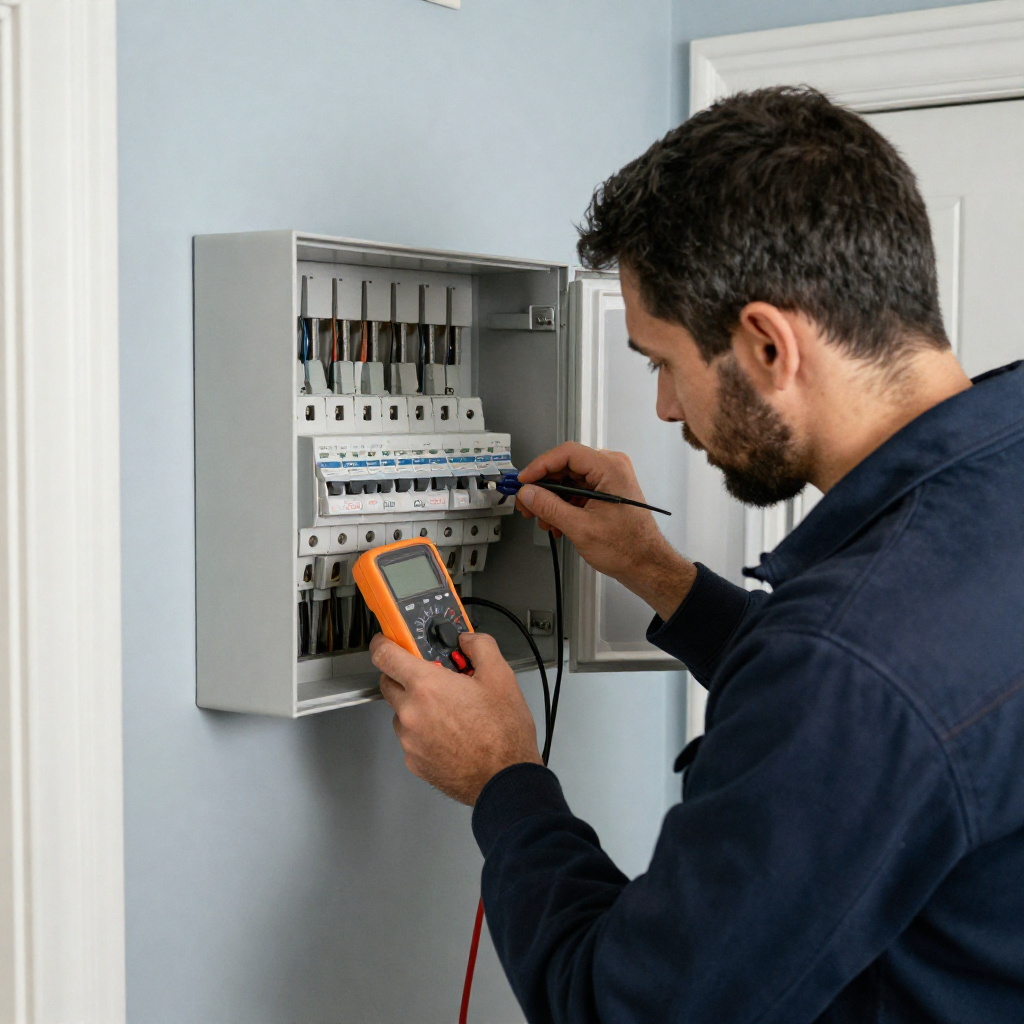
An EICR (Electrical Installation Condition Report) is a formal inspection of the fixed electrical installation — consumer unit, wiring, sockets and switches — carried out by a qualified electrician.
Understanding C1, C2 and C3 codes
•C1 — Danger present. Immediate action required.
•C2 — Potentially dangerous. Remedy urgently.
•C3 — Improvement recommended, not mandatory.
•FI — Further investigation required.
Any C1, C2 or FI code means the report is 'Unsatisfactory' and you have 28 days to remedy and provide written evidence to the tenant and council.
How often you need an EICR
Every five years, or at every change of tenancy if the electrician recommends it. Some older properties are put on a three-year cycle.
Automating EICR renewals
Landvale reads the EICR PDF on upload, extracts each observation and its code, tracks the 28-day remediation window for C1/C2 items, and schedules the five-year renewal automatically.
Pillar guide
The Complete UK Landlord Compliance Guide
→
Frequently asked questions
Every five years, or sooner if the electrician's report recommends it.